2026 Partial Solar Eclipse
It was worth the effort
August 12 2026
I prepared for this one for a couple of weeks as it was going to be a deep partial eclipse (approx. 91% for me) and the last eclipse we had (March of 2025) was completely clouded over so I got nothing. This time I set up on Morecambe’s Stone Jetty, and many people turned out to watch the eclipse. I gave out all the spare eclipse glasses I had as many people didn’t have them (apparently they were impossible to get hold of in the days just before the eclipse) but I had managed to get some from the astronomy equipment supplier I use.
Here’s a photo of my setup:
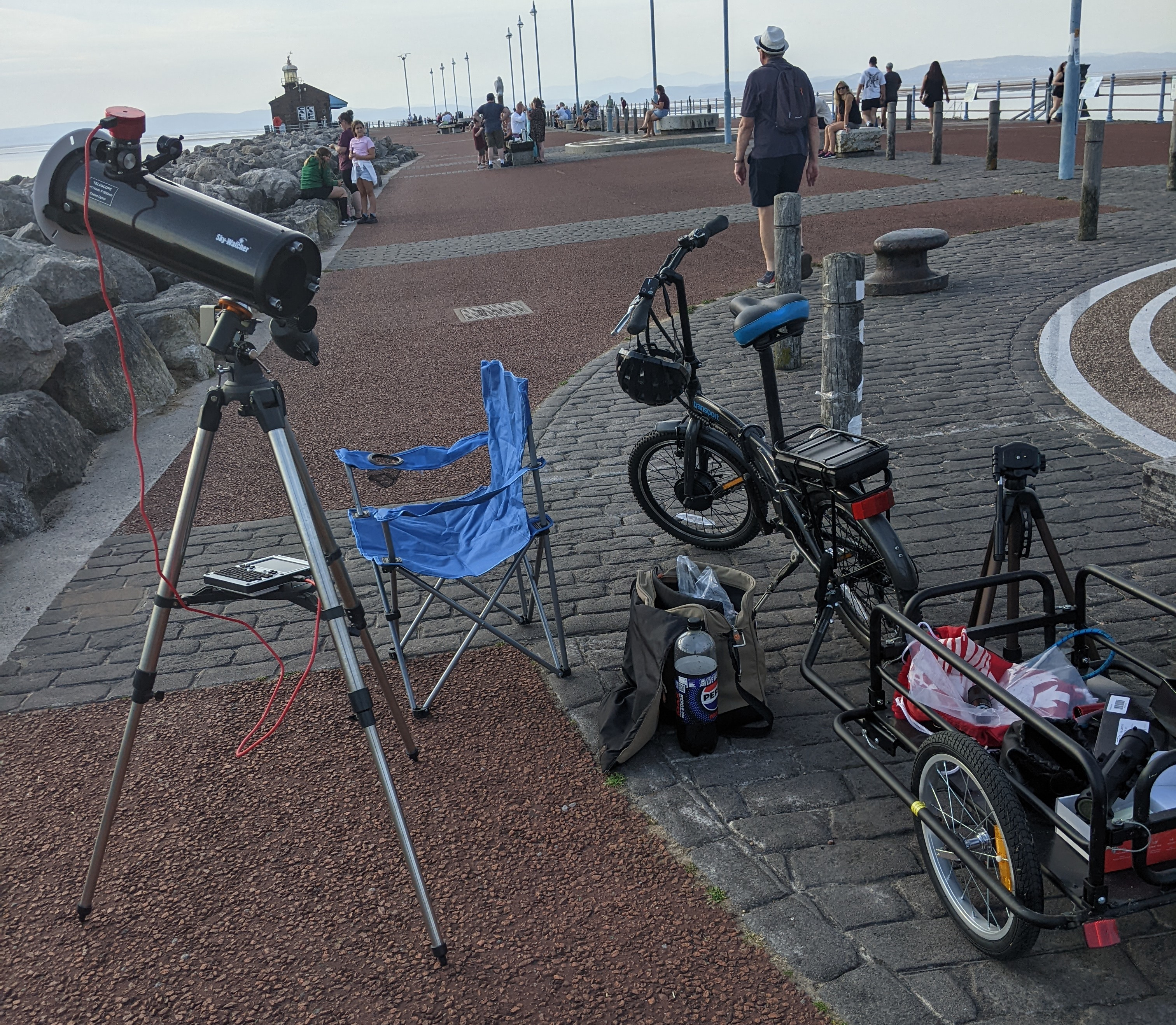
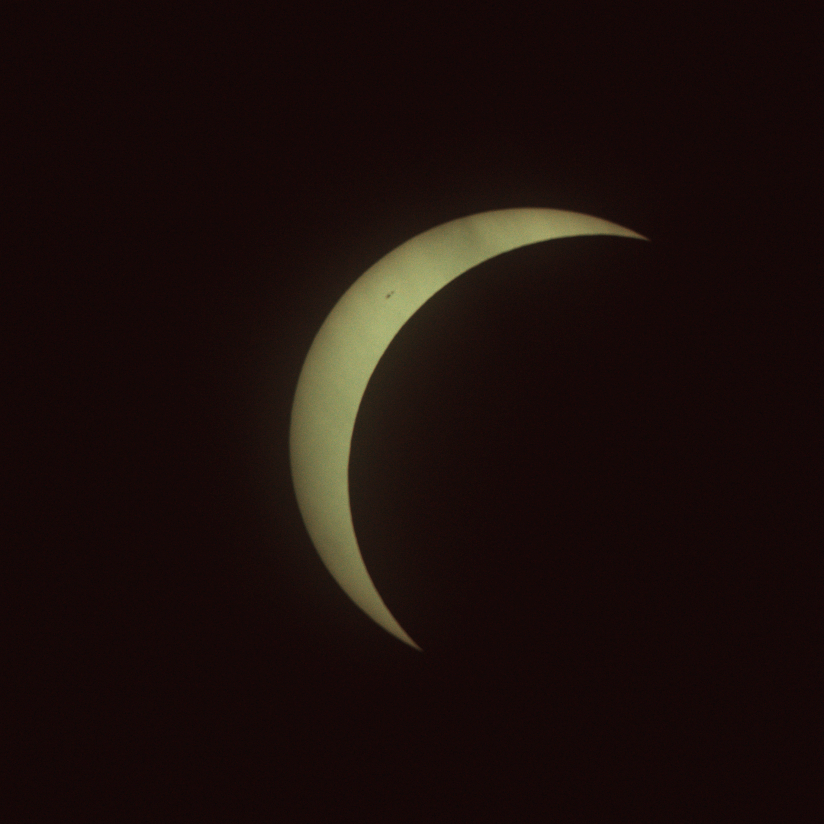
I was hoping to catch first contact, but was too slow getting set up to do so. The first shot that I got that wasn’t covered with clouds was this one:
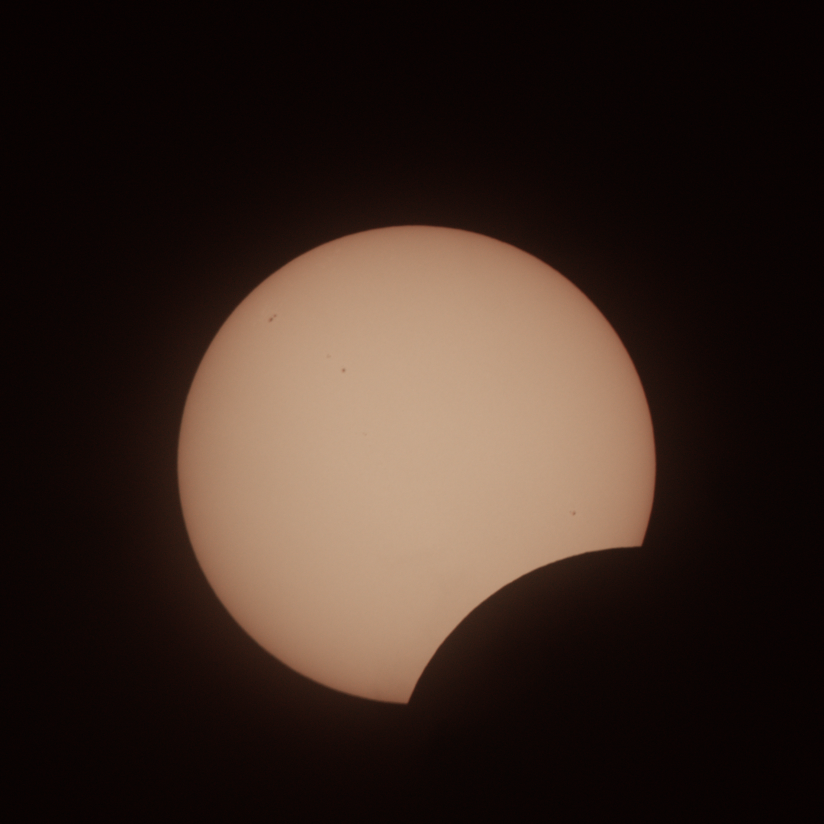
I’m really happy with this shot. It’s reasonably in focus and there’s good definition in the sun spots.
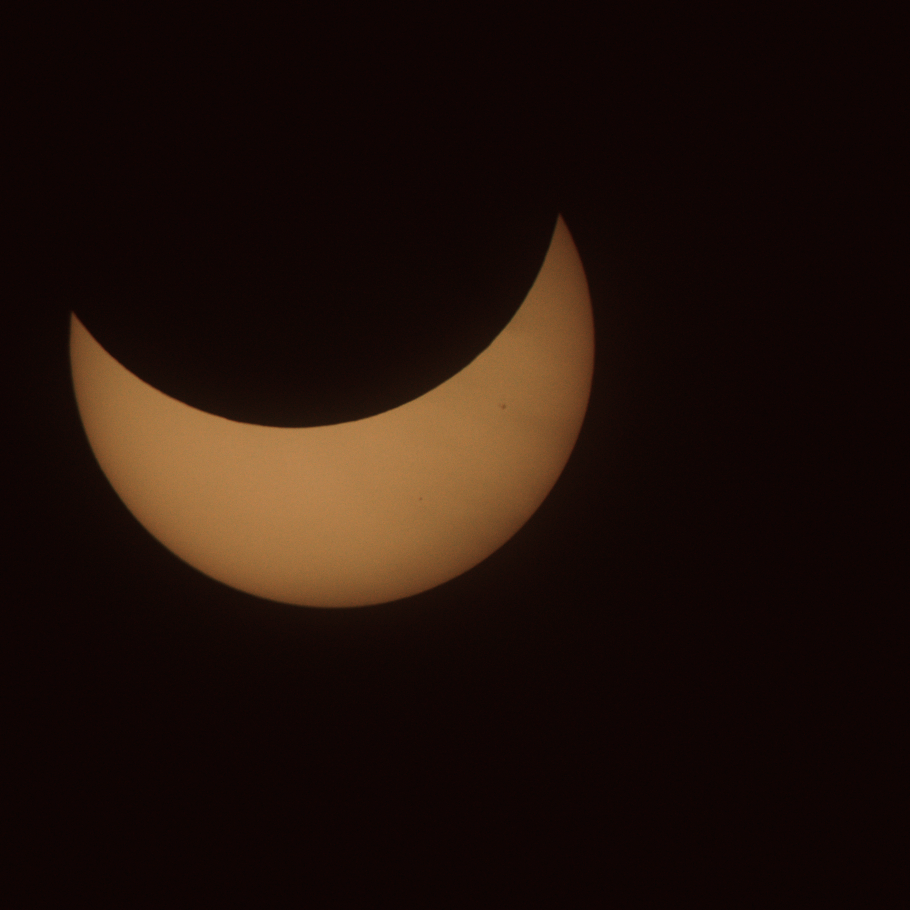
For contrast, here’s a similar shot I took of the 2015 solar eclipse but with a much worse setup:
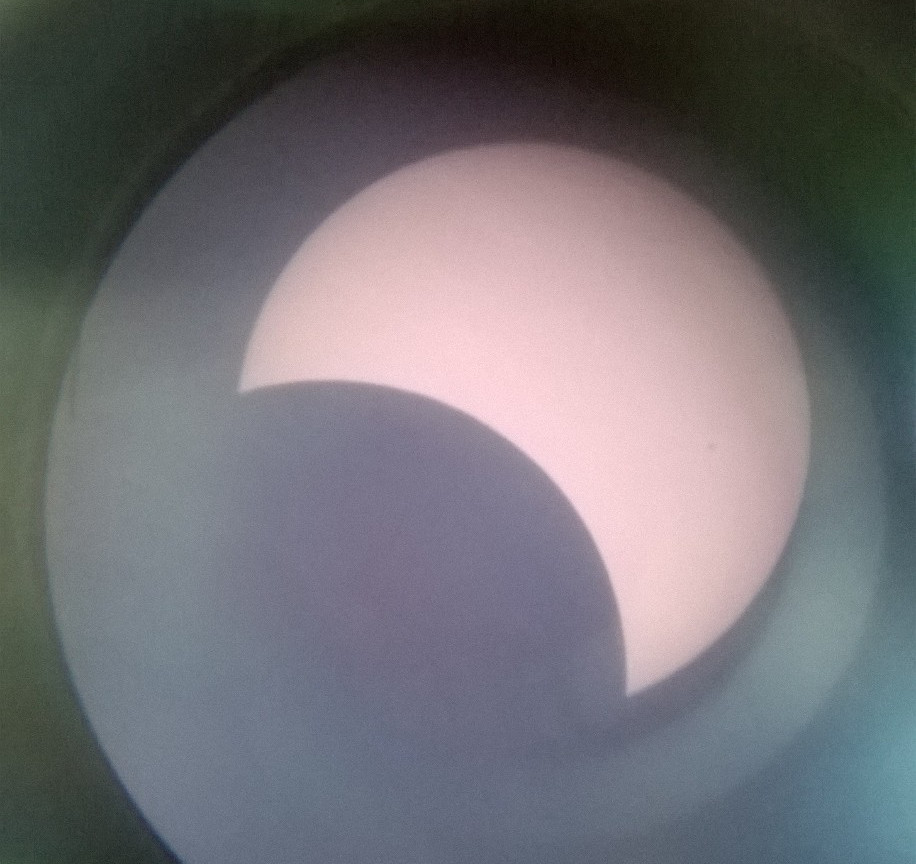
This is actually through the same telescope, but with a scrap of mylar blanket used as a solar filter and an eyepiece and old phone camera used to take the photo.
Here’s some more shots that I took:
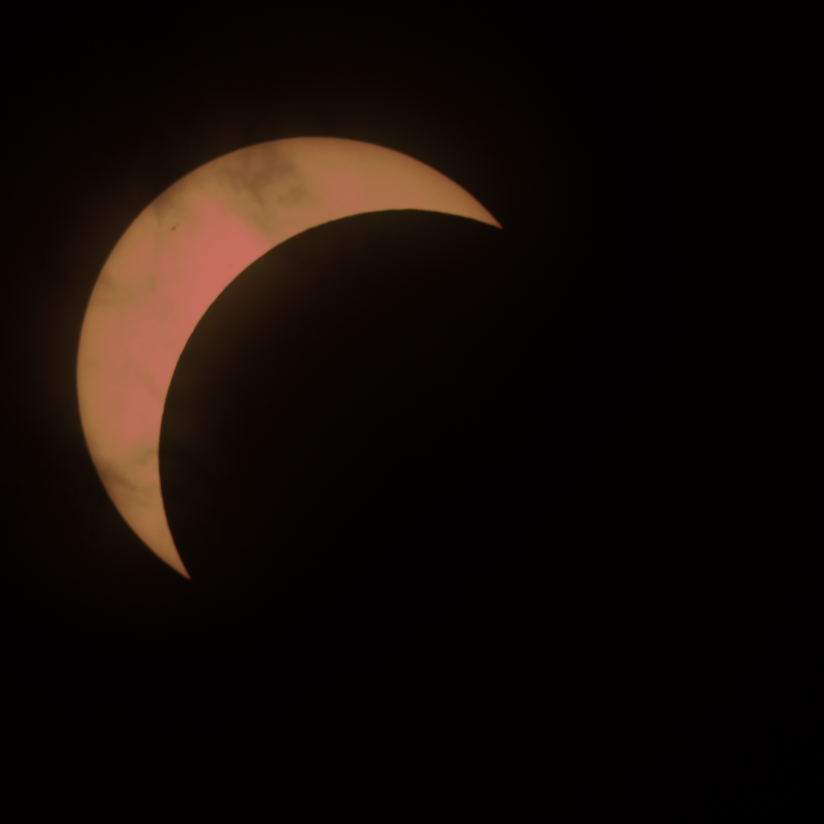
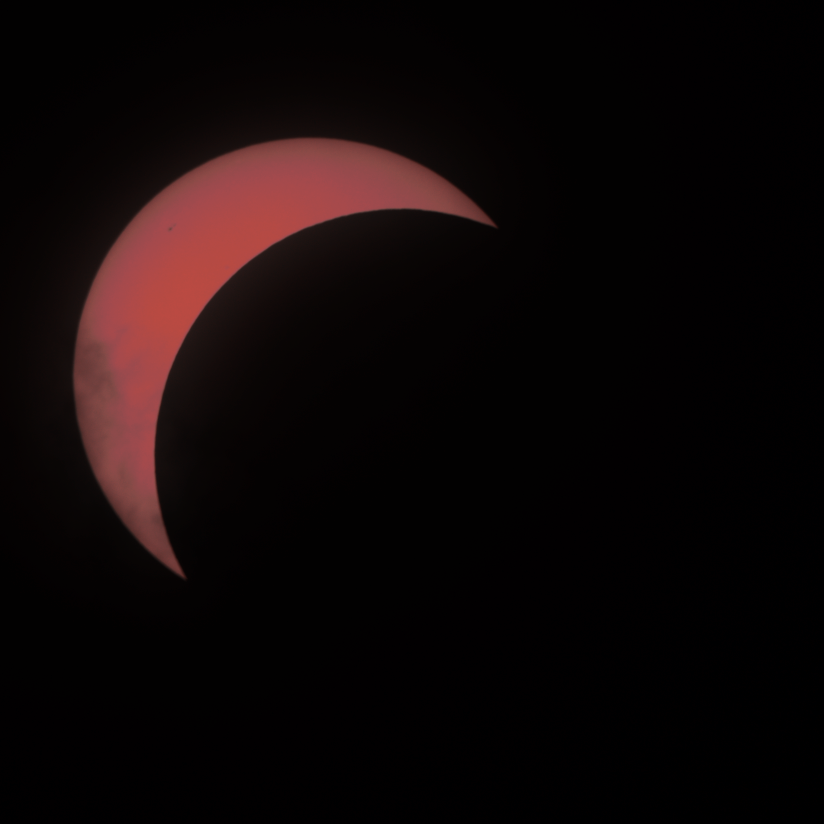
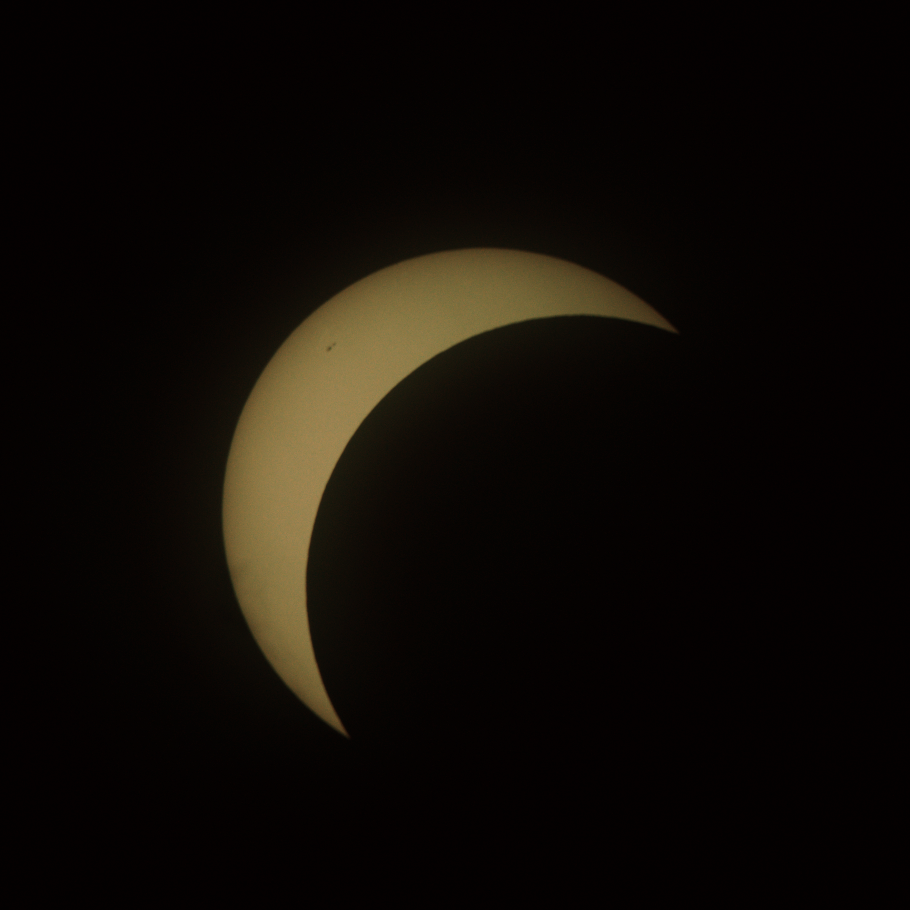
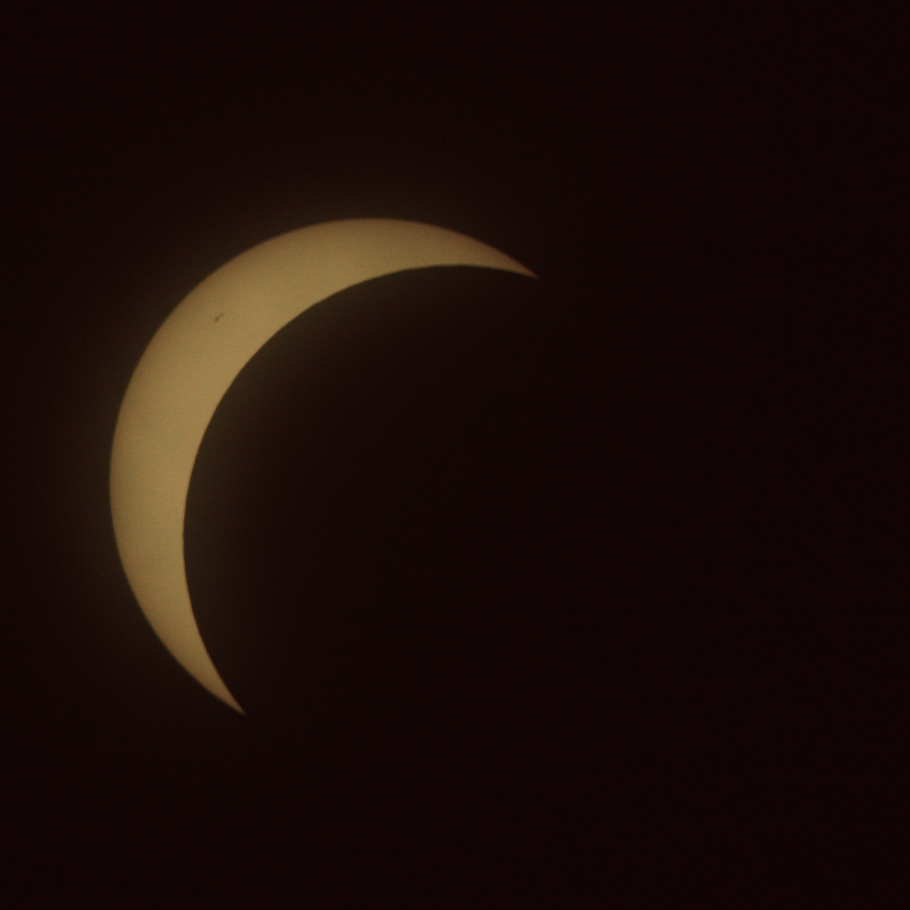
This next shot is a stack of about 20 frames, with a wavelet and then de-noise pass to try to bring up a bit of texture on the surface of the sun:
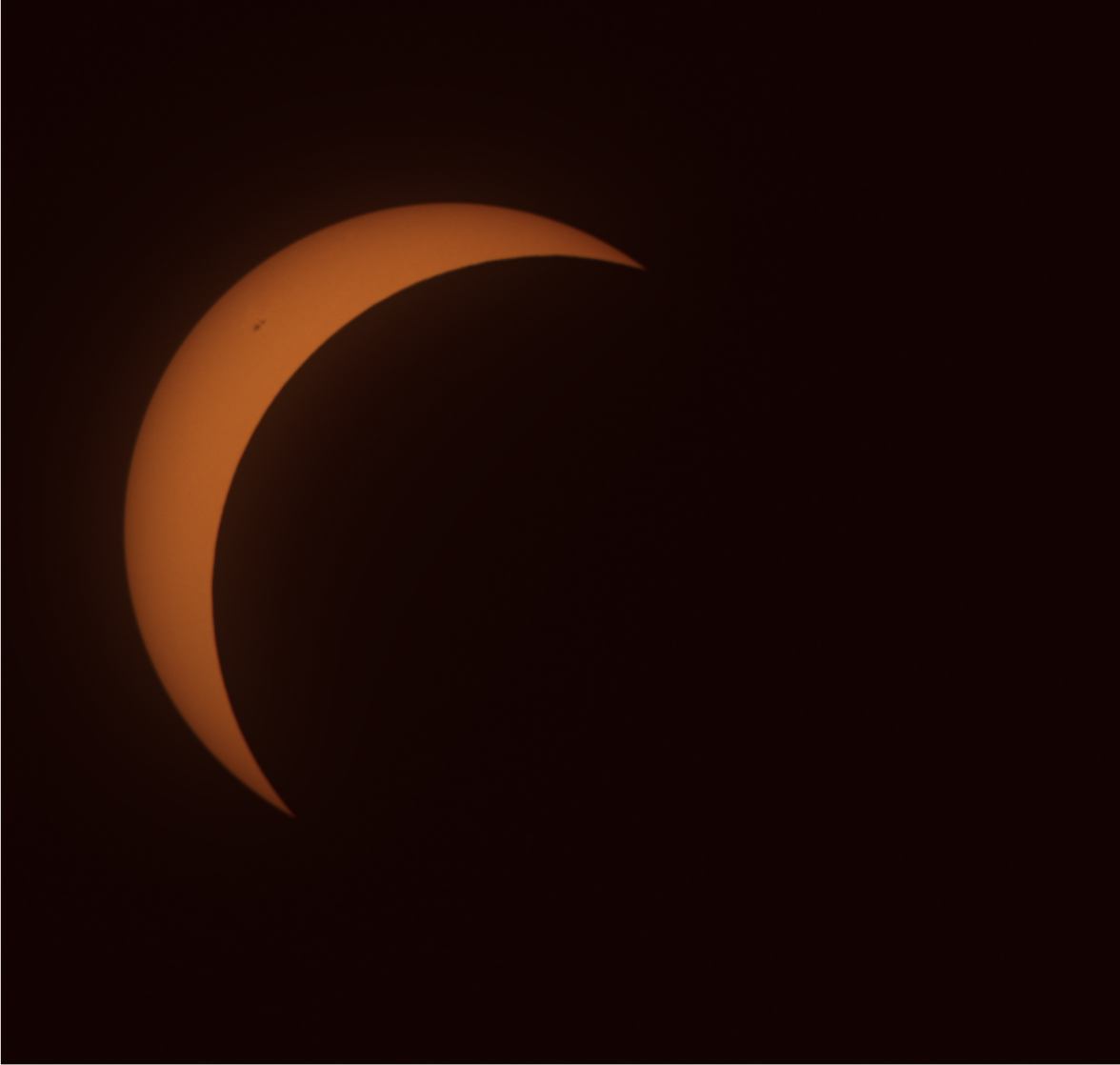
I still don’t really know what I’m doing with Siril but I’m happy with the result.
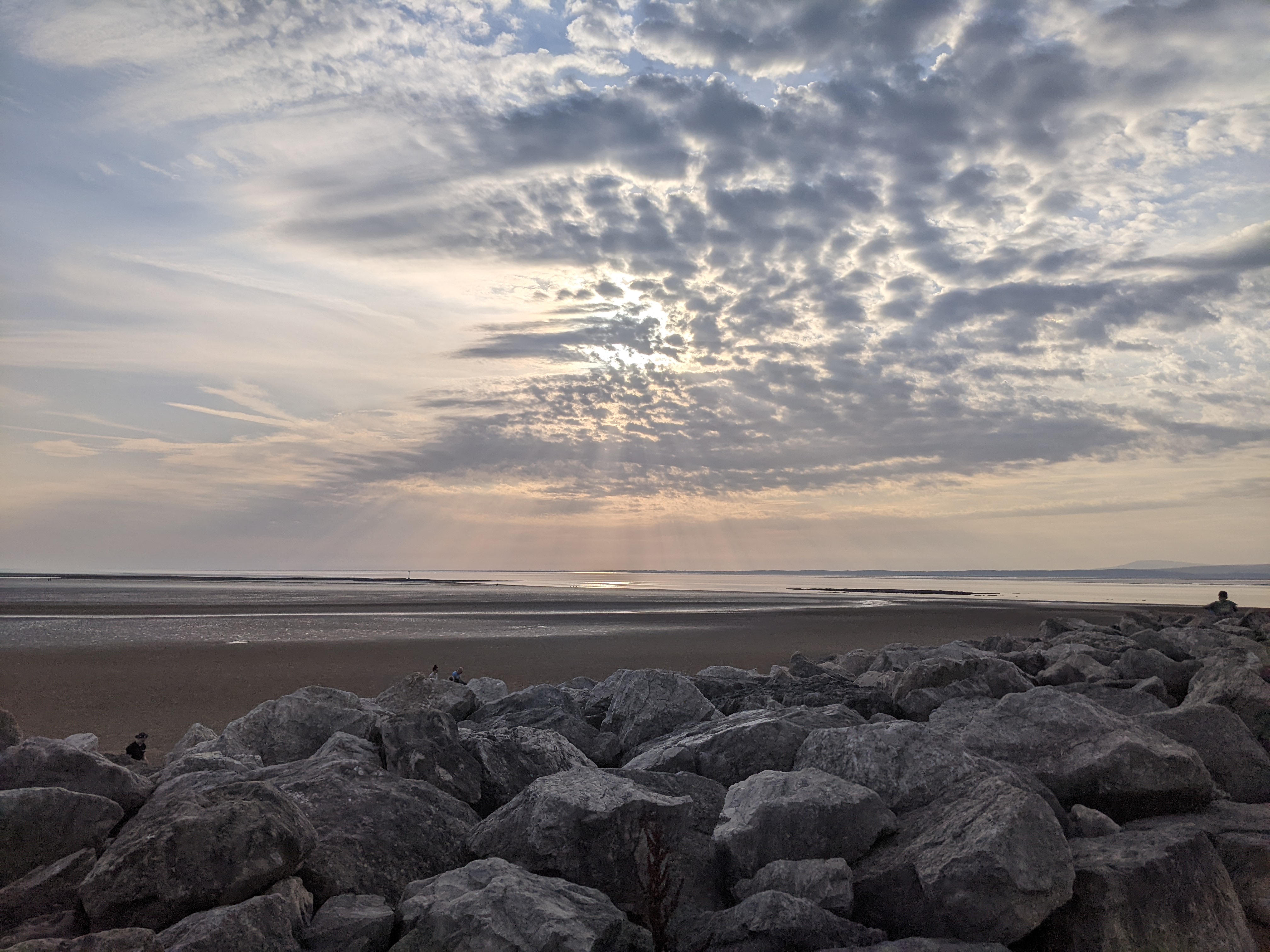
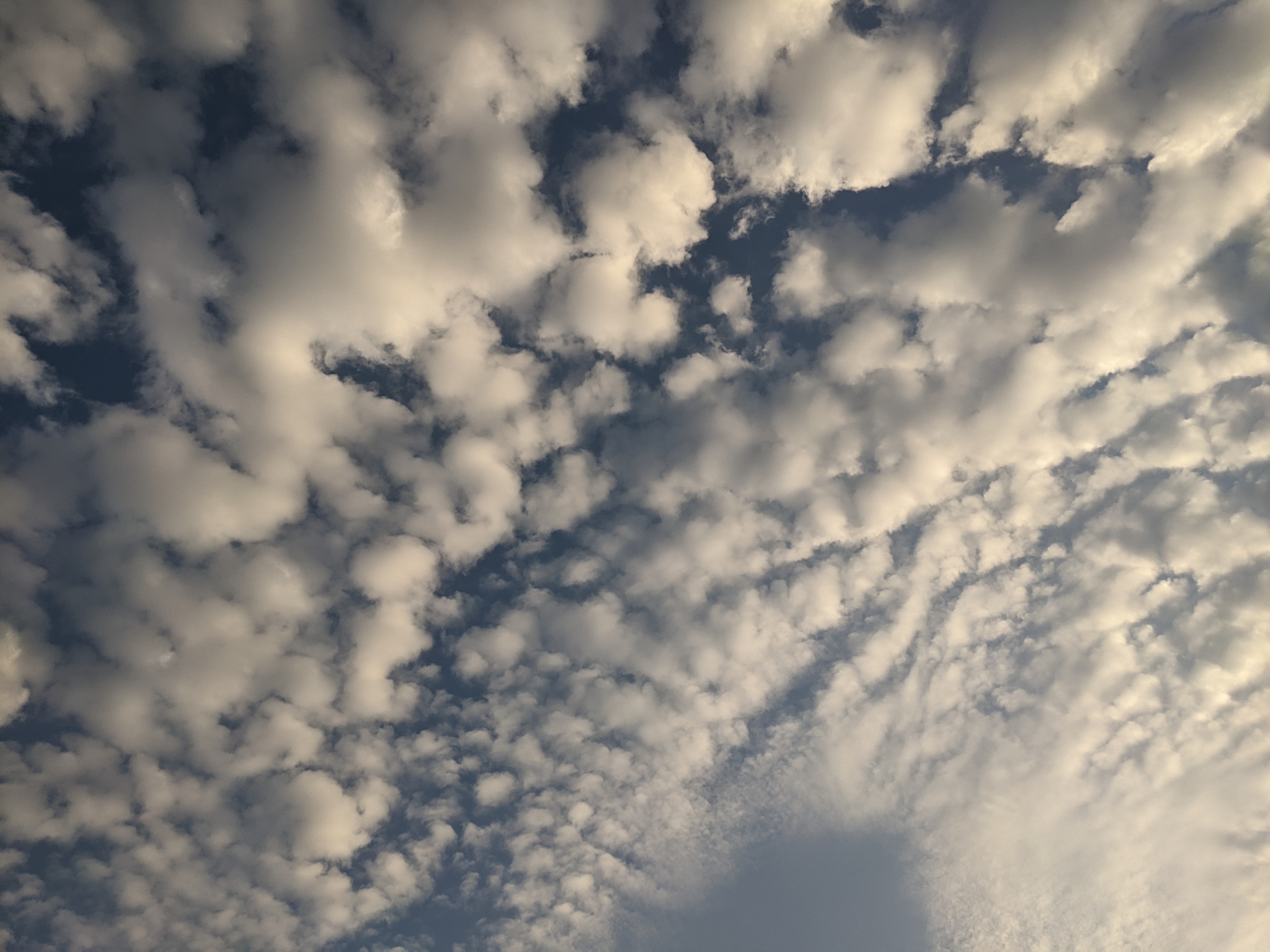
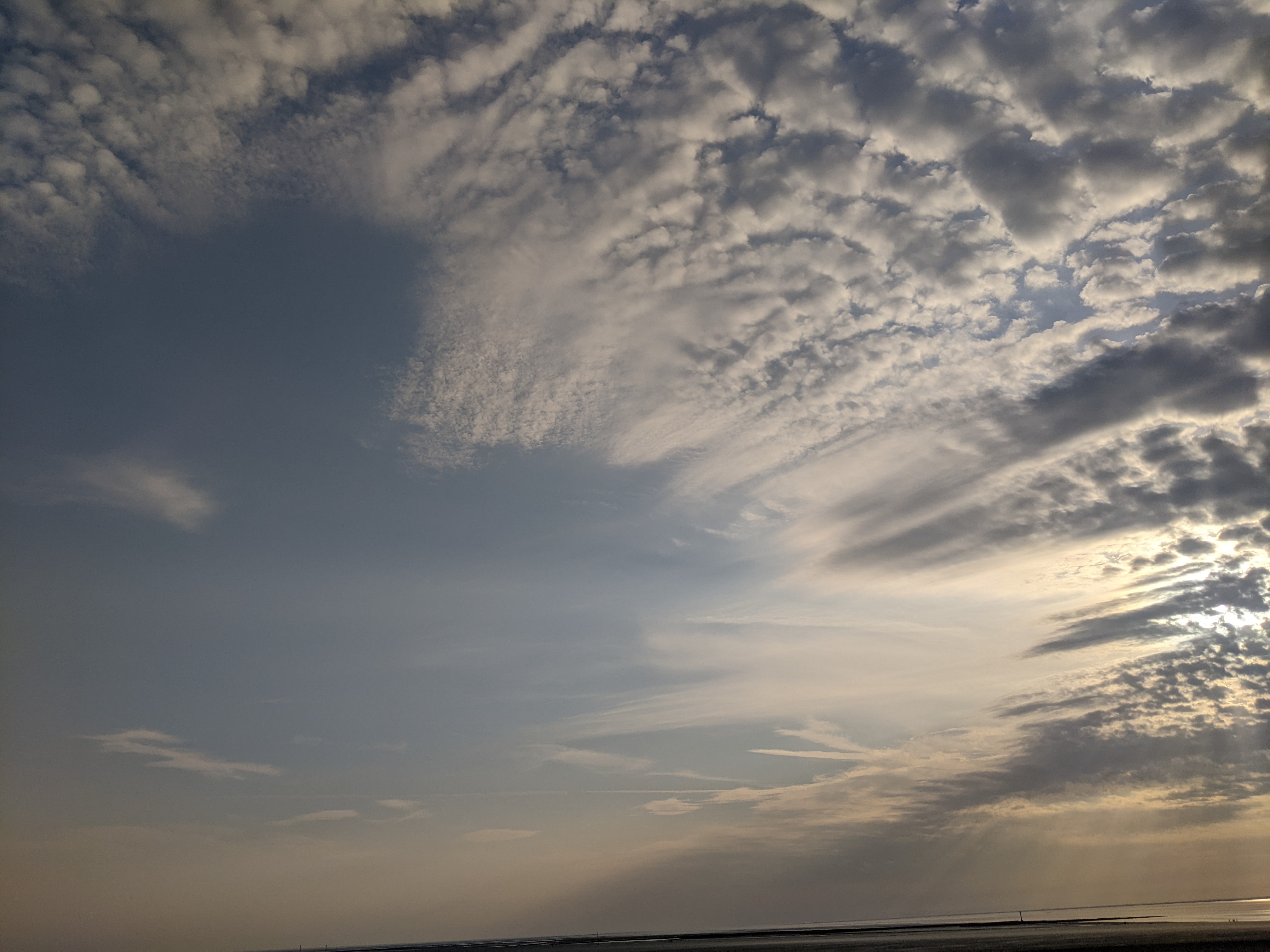
Around the point of maximum coverage, I also took these shots on my phone of the clouds which, while beautiful in themselves, made it a constant battle to get anything through the scope.
Looking through the FITS files I captured, I can see that I made a few mistakes on the day. Astro DMx (the capture software I was using) defaults to automatic white-balancing but it doesn’t work well at all for me. I just bounces around wildly, rendering each shot completely different from the last. I remembered to switch it off a one point but it would have made post-processing easier if it was switched off for the entire thing. I also didn’t check the histograms after every settings change which lead to me significantly under-exposing most of my shots. In a 16-bit FITS shot, a pixel can max-out with a value of 65,535, but most of what I captured doesn’t exceed about 2,500 meaning I’m right at the low end of what the camera can do. Practically, this means there was probably more detail I could have captured had I exposed correctly.
I was capturing everything into my clockworkpi uConsole which isn’t great for running my ZWO ASI676MC astro-camera. USB is only 2.0 speed so is a bottleneck on the camera’s USB 3.0 interface. CPU is very limited too. Both of these together limited me to about 3 frames-per-second of capture rate, but even if they hadn’t, I would have run into a storage limit wall even sooner. I knew storage was going to be an issue, so I swapped the 32GB microSD card the uConsole came with for a 64GB card I had lying around. Still, I managed to basically fill that in the first half an hour, before it even got to the height of the eclipse. I had to disconnect the camera to plug in an external SSD I had in my bag (the uConsole only has one USB-A port and didn’t like me using a USB-C to USB-A adapter for it’s other port) so I could copy some data off before resuming the capture. Even then the copy was slow due again to USB 2.0 speed (the SSD can do 3.0 but not the uConsole) but maybe also the read speed off of the microSD card. Overall, the uConsole is just not a great choice for this work, which is a shame as I really like the form-factor. I would normally use my laptop for this, but its battery is shot and I didn’t fancy lugging the big Anker Solix C800 I use to keep it powered out to Stone Jetty.
Overall, I’m really happy with how the day went. Many people came up to have a look at the telescope and the photos I was taking. I explained a bit about how the telescope works and the sort of filters I was using so I could safely look at the sun. Met a chap called Tom took some of his own photos with his DSLR. A friend from work came with his family to see the eclipse and I was glad to have something to show unlike last year. Above all, I’m happy with how much better these photos are than the ones I took in 2015. Maybe I’ll have to travel to see a total solar eclipse at some point to continue the trajectory of improvement.